



What Is an 18650 Battery? Structure, Capacity and Common Applications
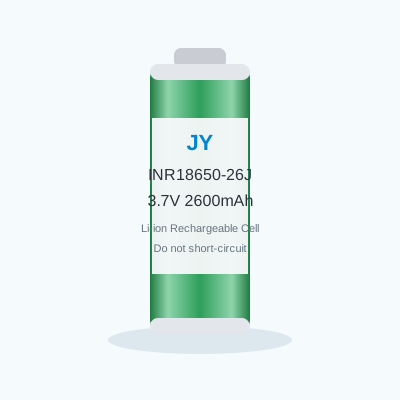
An 18650 battery is a cylindrical lithium-ion rechargeable cell with a diameter of 18 mm and a length of 65 mm — the numbers in the name. It is one of the oldest and still the most widely used lithium-ion cell formats in the world.
A typical 18650 cell consists of a steel or aluminum can, a coiled electrode assembly (cathode, separator, anode), electrolyte, a safety vent and a positive temperature coefficient (PTC) device on the top. The metal can gives the cell strong mechanical strength and good heat dissipation.
Capacity of common 18650 cells ranges from about 1800mAh to 3500mAh at a nominal voltage of 3.6V–3.7V. Higher capacity usually means lower maximum continuous discharge current, so cell selection is always a balance between capacity and current.
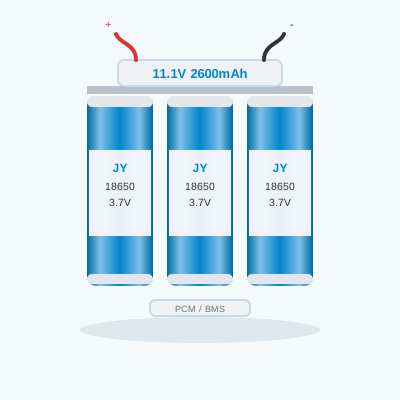
Typical applications include laptop battery packs, cordless power tools, LED flashlights, e-bikes, vacuum cleaners, portable energy storage and battery modules for testing equipment. Packs are built by spot-welding nickel strips between cells in series and parallel combinations, for example 3S1P or 3S2P.
Compared with polymer (pouch) cells, 18650 cells are standardized, mechanically robust and cost-effective, while polymer cells win where very thin or custom shapes are needed. Jingyu Electronics supplies both: single 18650 cells, custom 18650 packs with PCM or BMS, and polymer battery packs in any shape.