


Understanding UN38.3: Why It Matters When Shipping Lithium Batteries
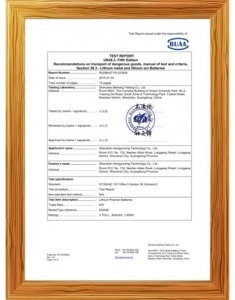
If you have ever imported lithium batteries, you have met the requirement of UN38.3. It is not a product quality certificate but a transport safety standard required by IATA (air) and IMDG (sea) regulations.
UN38.3 includes eight tests: T1 altitude simulation, T2 thermal cycling, T3 vibration, T4 shock, T5 external short circuit, T6 impact/crush, T7 overcharge and T8 forced discharge. Cells and batteries must pass all applicable tests at specified state of charge.
For a shipment you normally need: the UN38.3 test summary of the cell and the battery, an MSDS (material safety data sheet), a lithium battery mark and label on the outer box, and a shipper's declaration for dangerous goods when required. The watt-hour rating decides the packing instruction (PI965 to PI970).
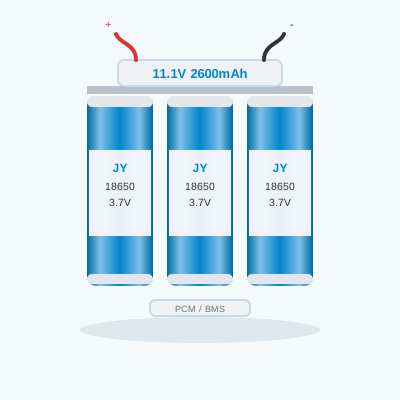
A common mistake is to assume that a certified cell automatically makes the finished pack shippable. In practice the pack itself (with PCM, wires and connectors) must also be covered by a UN38.3 report or a documented test exemption.
Jingyu Electronics renews UN38.3 reports every year for core models and provides the full document set, so customers can ship by air or sea without delays. Contact us with your model numbers to receive the reports.