




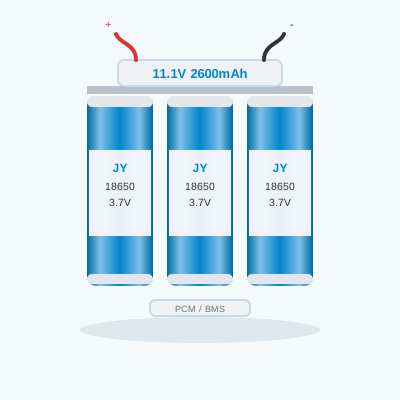

How to Store Lithium Batteries Safely During Long Periods
Lithium batteries age even when not in use, and most of that aging is driven by storage voltage and temperature. Storing them correctly can add a year or more of service life.
State of charge: the best storage level is 40–60%. A fully charged cell stored for months ages much faster and its electrolyte oxidizes the cathode; a fully empty cell can drop below the safe voltage and be permanently damaged. This is why we ship standard packs at about half charge.
Temperature: the ideal storage temperature is 10–25°C, dry and away from direct sunlight. Avoid leaving products with batteries in hot cars or in freezing outdoor sheds; both heat and frost accelerate degradation.
Maintenance charging: for packs stored longer than 3–6 months, recharge them to the storage level. For devices in the field, follow the manufacturer's storage instructions and power down the device completely, because standby drain can deep-discharge the pack over months.
Safety: store batteries away from flammable materials, keep terminals protected against short circuit, and follow local regulations for large quantities. Damaged, swollen or leaking packs should be quarantined in a metal container and disposed of through certified recyclers, never in normal waste.