



Why Do Lithium Batteries Age? A Simple Explanation of Cycle Life
Cycle life is the number of complete charge-discharge cycles a battery can deliver before its capacity falls to a defined end point, usually 80% of the original rating. A typical good lithium-ion cell offers 300 to 1000 cycles to 80%, depending on chemistry and usage.
Inside the cell, two main aging mechanisms are at work. On the anode, a passivation layer (SEI) grows with every cycle, consuming lithium and increasing internal resistance. On the cathode, structural stress and electrolyte oxidation slowly reduce the active material. Both effects accumulate faster at high temperature and high voltage.
Depth of discharge matters: cycling between 20% and 80% can double the achievable cycles compared with full 0–100% cycling. Charge rate also matters; fast charging above 1C regularly will shorten life, especially in cold conditions where lithium plating can occur.
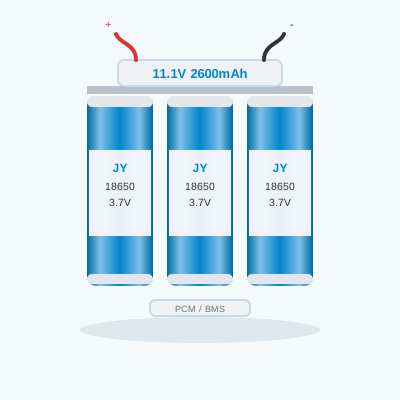
For product designers, the practical levers are: choose a slightly larger capacity so the pack is not cycled to its limits, set the charger to end at 4.1V instead of 4.2V when maximum runtime is not critical, avoid heat sources near the battery, and specify a quality PCM that prevents over-discharge.
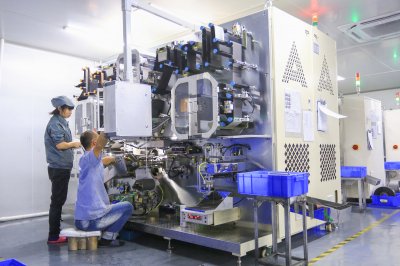
At Jingyu Electronics, cycle life is verified in our laboratory with real charge-discharge cabinets under customer-specified profiles, and every batch keeps samples on aging test for continuous monitoring.