


Series or Parallel? Building 18650 Battery Packs the Right Way
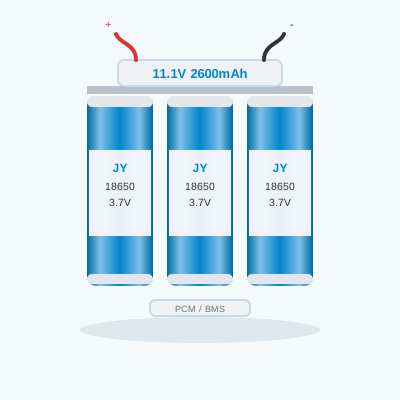
Battery packs are described by their S and P configuration: 3S1P means three cells in series and one in parallel. Series connections add voltage — 3 x 3.7V gives 11.1V — while parallel connections add capacity and current capability.
Cell matching is the heart of pack quality. Cells used in one pack should be matched in capacity, internal resistance and self-discharge (K-value). Poorly matched packs lose balance quickly: the weakest cell limits the whole pack, triggers protection earlier, and ages faster than the rest.
Connections are usually made by spot-welding nickel strips onto the cell terminals. Soldering directly to cells is risky because the heat can damage the separators and vents; if soldering is unavoidable, it must be done by trained operators within a strict time limit.
Mechanical design matters as much as electrical design: insulating fish paper between layers, PVC or heat-shrink wrapping, vibration-proof fixing, and strain relief on the lead wires. For products that face heat or vibration — power tools, e-bikes, portable storage — these details decide whether the pack survives its warranty period.
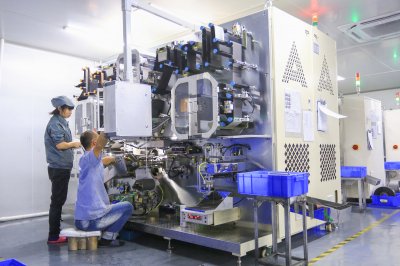
Every 18650 pack from Jingyu Electronics is built from sorted cells with matched K-value, welded on automatic machines, protected by a matched PCM/BMS, and 100% tested for voltage, internal resistance and capacity before packing. Send us your target voltage, capacity and space, and we will propose the configuration.